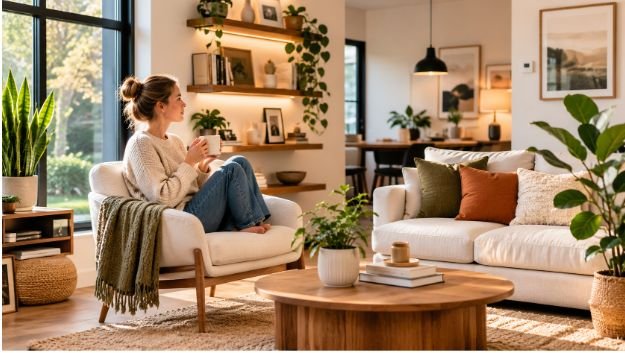

I do not believe a simpler life should feel like punishment. Learning how to live with less without feeling restricted means removing friction, not every comfort. The goal is not an empty home or tiny wardrobe. It is a life where possessions, spending, and routines support what matters most.
Research gives this idea practical weight. One study linked stressful home descriptions with less favorable daily mood and cortisol patterns among women. A controlled experiment also found that household chaos increased negative emotions and affected stress responses. Less visual and logistical noise can help, but aggressive decluttering is not the only answer.
Define What “Enough” Means to You
The first step in how to live with less without feeling restricted is deciding what enough looks like in your real life. Generic minimalist rules ignore family size, climate, work, hobbies, health needs, and personal taste.
Ask three questions:
- What do I use during a normal week?
- What supports my responsibilities or genuine enjoyment?
- What amount can I maintain without stress?
These questions create a personal baseline. A household that hosts weekly dinners may need more dishes than someone living alone. “Enough” should reduce clutter without creating inconvenience.
Use the Enough–Ease–Exit Test
My original framework is the Enough–Ease–Exit test:
Enough: Do I already own enough for this purpose?
Ease: Will this item simplify life or add cleaning, storage, and maintenance?
Exit: Could I borrow, rent, replace, or access it later?
The Exit question reduces fear. You are not deciding that you can never own the item again. You are deciding whether permanent ownership is necessary now.
Practice Reversible Minimalism Before You Purge
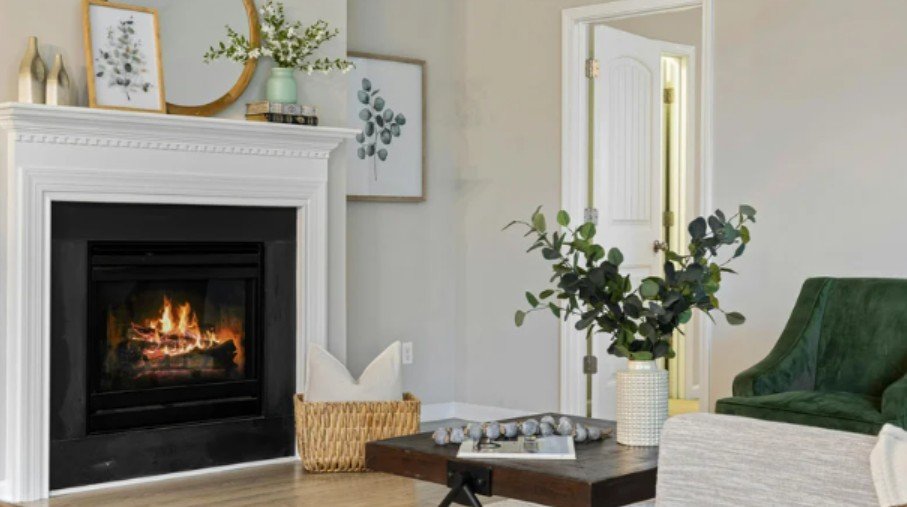
People often feel restricted after decluttering too quickly. They remove useful or sentimental belongings, regret the decision, and buy replacements.
Use reversible minimalism instead. Place uncertain items in a dated box for 30 days. Keep it outside your main living area. Retrieve anything you genuinely need. After the test, donate, sell, recycle, or store only what has a clear purpose.
This teaches how to live with less without feeling restricted because it separates temporary discomfort from actual need. You can test a simpler space without making every decision permanent.
Curate What Stays
Focus on the best items rather than the biggest donation pile. Keep objects that are useful, reliable, meaningful, or pleasant to use. Release duplicates, broken belongings, frustrating products, and possessions kept for an imagined future.
I prefer one dependable tool over several weak versions. I would also keep a joyful object with no practical function if it adds warmth or personality. Intentional living is not an aesthetic contest.
You do not need white walls, an empty bookshelf, or a ten-item wardrobe. You need a manageable amount of belongings that reflects your actual life.
Choose Quality, Utility, and Visibility
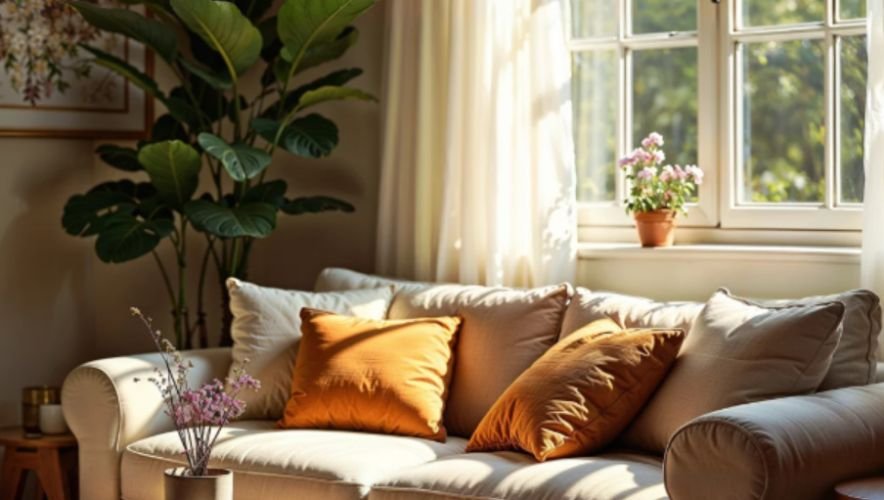
A smaller collection works when the remaining items perform well. Choose durable products, repair what you can, and favor multipurpose objects.
The U.S. Environmental Protection Agency recommends buying only what is needed, repairing worn products, and borrowing, renting, or sharing things used infrequently. These habits reduce waste while helping you avoid storage costs and unnecessary purchases.
Keep frequently used belongings visible and easy to reach. Crowded drawers hide what you own and encourage duplicate purchases. Add organizers only after reducing the volume. Otherwise, you are simply buying more products to manage existing products.
Leave selected shelves, counters, and corners empty. Empty space gives the eye a resting place and makes cleaning faster. This is a practical part of how to live with less without feeling restricted because space becomes a benefit you can see.
Change Consumption Without Banning Pleasure
A sustainable approach to how to live with less without feeling restricted changes the buying process instead of banning purchases. Rigid rules can create resentment. A thoughtful pause creates choice.
Wait 48 hours before buying a nonessential item. During the pause, ask whether you own a suitable alternative, where the new item will live, and what problem it solves. Extend the pause to seven or 30 days for expensive purchases.
The waiting period is not designed to prevent every purchase. It helps separate real value from temporary excitement.
Use a one-in, one-out rule for stable categories such as shoes, coats, kitchen tools, and beauty products. Treat it as a boundary, not a punishment. Replacing a damaged bath towel should not require discarding a useful blanket.
Spend More on Life and Less on Accumulation
Living with less does not mean spending nothing. It means directing money toward priorities.
Research has found that experiential purchases can create greater satisfaction than material purchases. A class, trip, meal with friends, concert, or outdoor activity may add more lasting value than another decorative purchase.
This approach also supports creating a low maintenance lifestyle. Fewer subscriptions, duplicate products, and trend-driven purchases mean fewer decisions and less upkeep.
Before buying an object, calculate its complete cost. Include the time required to clean, organize, insure, repair, move, and eventually dispose of it. A cheap purchase can become expensive when it repeatedly demands attention.
Reduce Physical and Digital Clutter Together

Scan paperwork when digital copies are legally and practically acceptable. Use clear filenames, secure storage, and a reliable backup. Keep original identity, tax, property, medical, and legal documents when required.
Do not digitize everything automatically. Saving thousands of unorganized files only moves clutter from a cabinet to a screen. Delete duplicates and use simple folders based on purpose.
Unsubscribe from marketing emails, remove shopping apps that trigger impulse purchases, and cancel unused subscriptions. To master how to live with less without feeling restricted, reduce the prompts that constantly tell you to want more.
A calmer inbox and home screen can support the same intentional mindset as a clear countertop.
Try a Seven-Day “Less but Better” Experiment
Test the method without overhauling your life.
On the first day, define enough in one category. Box uncertain items on the second day. Clear one visible surface on the third. Pause one purchase on the fourth. Borrow or reuse an alternative on the fifth. Digitize one paper stack on the sixth. Record what improved and what felt inconvenient on the seventh.
Consider a two-person household with 18 mugs but regular use for six. They keep eight favorites, box six, and discard four damaged mugs. After 30 days, they retrieve none.
They have not sacrificed the ability to enjoy coffee or host visitors. They have gained easier access, faster cleanup, and a cupboard that closes properly.
That small test demonstrates how to live with less without feeling restricted through evidence from your own routine. Your results determine what stays, rather than an arbitrary minimalist rule.
Frequently Asked Questions
1. How can I live with less when my family is not minimalist?
Simplify your belongings and shared problem areas first while respecting items owned by other household members.
2. How do I declutter without regretting it?
Use a 30-day holding box, photograph sentimental items, and delay permanent decisions when uncertainty remains.
3. Can living with less include hobbies and collections?
Yes. Keep collections that provide active enjoyment, fit your space, and do not create financial or maintenance stress.
4. What is the easiest way to learn how to live with less without feeling restricted?
Start with one low-emotion category, define enough, and make the first change reversible.
Less Stuff, More Nerve: Keep What Earns Its Place
I see how to live with less without feeling restricted as an editing process, not a deprivation challenge. Keep what supports your life. Remove what creates repeated work, debt, distraction, or guilt. Leave room for comfort, beauty, hobbies, and personality.
Choose one drawer, shelf, or planned purchase today. Apply the Enough–Ease–Exit test and make one reversible change. You do not need to prove that you can survive with almost nothing. You only need more room for what is worth keeping.
That is how to live with less without feeling restricted while still enjoying your home and daily life.